Used Citroen C4 (Mk2, 2010 - 2018) review and buyer's guide
A full used buyer’s guide on the Citroen C4 covering the C4 Mk2 (2010-2018)

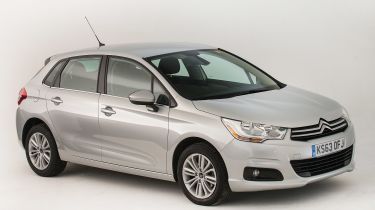
If you’re looking for a family car on a budget, the C4 could be just what you need. It may not be as much fun to drive as some rivals, but the Citroen is practical, well equipped, cheap to run and there are some brilliantly efficient engines to choose from. One of the most appealing aspects of the C4 is its comfortable ride. Many rivals have sacrificed comfort for pin-sharp handling, and although the Citroen is slightly wallowy to drive, it’s more adept than many cars its age at dealing with the UK’s crumbling roads. Add those affordable second-hand prices, and if you buy a manual C4 you could be looking at a real family car bargain.
Every year, more small family hatchbacks are sold across Europe than any other type of car. There are so many to choose from that it can be bewildering deciding between all the contenders.
While models such as the Ford Focus and Vauxhall Astra tend to get all the headlines, there are lots of other less obvious models vying for your cash, and one of those is the Citroen C4. You could be forgiven for not even realising the C4 existed – it’s distinctly average in most respects and one of the fastest-depreciating cars in its class. But used C4s can still make great buys thanks to some seriously keen prices.
Models covered
The Citroen C4 was launched in 2004 as the successor to the Citroen Xsara. Its second generation went on sale in 2010 and was replaced by the Mk3 in 2018, it’s this model that we’re looking at in this review.
Used - available now


- • Citroen C4 Mk2 (2010-2018) - Heavy depreciation makes alternative family hatch choice a bargain second-hand buy
Citroen C4 Mk2
History
The second-generation Citroen C4 (internally codenamed B7) went on sale in January 2011, with 1.4 or 1.6-litre petrol engines and 1.6 or 2.0-litre diesels.
While its predecessor was available in three or five-door hatchback forms, the Mk2 came with five doors only, and a choice of VTR, VTR+ and Exclusive trim levels. Only the entry-level engines (1.4 VTi 95 and 1.6 HDi 90) were offered in VTR trim, though.
A spring 2015 facelift brought new front and rear lights, upgraded interior trim and a new dash with a seven-inch touchscreen. A 1.2-litre three-cylinder PureTech petrol engine was introduced at the same time, along with more efficient 1.6-litre diesels. Trim levels were renamed Touch, Feel and Flair.
Citroen C4 Mk2 reviews
- Citroen C4 1.2 PureTech 130 EAT6 review
- Citroen C4 1.6 BlueHDI review
- Citroen C4 1.2 e-THP VTR+ review
- Citroen C4 1.6 VTi review
- Citroen C4 2.0 VTi review
- Citroen C4 1.6 e-HDI review
Which one should I buy?
The diesels are generally the ones to go for, although the 1.2 PureTech is a brilliant engine, and the 1.6-litre petrol units are also fairly zesty – especially the THP.
We’d avoid the EGS automatic transmission as it’s clunky to use – the manual alternative is much slicker – but E-HDi and THP (turbocharged petrol) engines came only in EGS form. The VTR is equipped with ESP as standard, along with hill start assist, a multifunction steering wheel, cruise control, heated door mirrors, air-con and electric front windows.
VTR+ spec adds rear parking sensors, 16-inch alloy wheels, powered rear windows and electrically folding door mirrors. The Exclusive also has 17-inch alloys, climate control, front parking sensors, privacy glass plus automatic lights and wipers.
Alternatives to the Citroen C4 Mk2
Rivals that major on value include the Vauxhall Astra, Peugeot 308 and Renault Megane, which are all decent family hatchbacks, but still not class leaders.
The Ford Focus represents excellent value for money, too, plus it’s great fun to drive. There are also loads to choose from.
You’ll need deeper pockets to buy a SEAT Leon, Mazda 3, Toyota Auris or Honda Civic, but all provide a decent level of safety, build quality and usability. We wouldn’t overlook the Kia Cee’d or its cousin the Hyundai i30, either; both come with long warranties, lots of kit and have excellent reliability records; they’re just not the bargains you might want.
What to look for:
Interior
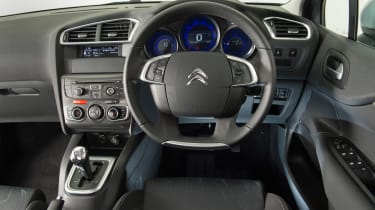
The C4’s dashboard design is quite stylish, but some of the materials don’t look or feel very durable. Those in the front get plenty of space yet the rear seats are cramped, due to the large boot, which is bigger than rivals’, at 408 litres.
Battery woes
If the car refuses to turn over, as though the battery is flat, it might be because of a faulty connection between the battery and the fusebox.
Cooling fan
Radiator cooling fans can come on for no apparent reason. This is usually because the control unit needs to be replaced. A new one will set you back about £20.
Paint adhesion
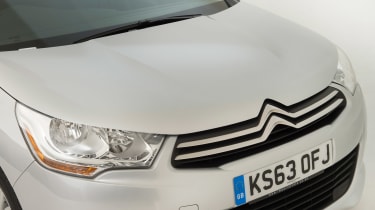
The aluminium bonnet can suffer from poor paint adhesion, so look for blistering, especially along the leading edge. Repaints don’t always work.
Spare wheel
The C4 comes with a tyre mobility kit rather than a spare wheel, but it does feature a spare-wheel well into which you can fit a full-size wheel.
Running costs
All C4s need to be serviced every 12 months or 20,000 miles, apart from the 1.6 HDi, which cuts the mileage limit to 12,500. Services alternate between minor and major. Services for petrol and diesel models cost the same. All engines feature a timing belt which needs to be replaced every 10 years. Mileage limits vary, from 100,000 miles for the petrol engines and 150,000 for 1.6 HDi diesels.
Recalls
The C4 Mk2 has been recalled a disappointing nine times so far, meaning all sorts of issues could crop up. The first campaign was launched as early as December 2011, due to the possibility of the brake pedal bracket failing (leading to brake loss). Since then, recalls have also been issued because of fuel leaks, brake problems and the engine cutting out. The front suspension could become loose as well.
Driver Power owner satisfaction
Citroen won’t be celebrating the C4 Mk2’s 139th place in our Driver Power 2016 satisfaction survey. It only managed top 100 scores for running costs (80th) and practicality (94th). Its worst marks were for ease of driving (147th) and handling (141st).
Citroen C4 hatchback (2010-2018) review: What we said
Extracts from our 2017 review of the Mk2 Citroen C4...
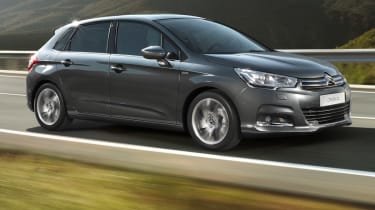
Even compared to some budget competition, the Citroen C4 is well outclassed. It feels like an old car – and a 2015 facelift didn’t do enough to bring it back into contention. It’s also not as practical as many rivals, plus it’s too expensive and will lose more money in depreciation.
It’s spacious enough though, especially in the front. It's also comfortable thanks to a particularly soft ride, although the trade-off is lacklustre handling – most of its rivals are more fun to drive.
While the C4’s standard equipment and technology don't feel cutting-edge, all later models feature air conditioning, electric front windows and cruise control. They’re also all cheap, but they're not as efficient as many rivals - even the cheaper C4 Cactus, which in our eyes is by far the more rounded car, is a better choice.
The Citroen C4 has formed the basis for a number of other models in the Citroen range, from the C4 Cactus to the C4 Picasso and Grand C4 Picasso, but the basic hatchback is something of a disappointment in comparison. There were two generations of Citroen C4, with the first running from 2004-2010, while the C4 Mk2 here was in production from 2010-2018. The second generation delivered comfort and reasonable space for a decent price, but unfortunately the compact hatchback class is one of the toughest markets out there, and the C4 struggled in the face of a raft of talented competition.
While the original C4 came as a five-door hatchback or a sportier three-door with a different body design (which gained a cult following, courtesy of Citroen rally driver Sebastien Loeb and his multiple world rally championship wins in it), the Mk2 just came as a five-door. If you wanted something other than a hatch, your choices with Citroen were either the C4 Picasso MPV, the larger Grand C4 Picasso version, or later in the C4's life, the C4 Cactus pseudo crossover/hatch.
Citroen gave the C4 a minor facelift in 2015 to coincide with the arrival of cleaner Euro 6-compliant engines, and these are the motors we'd choose if you're looking to buy a used C4. The 1.2 PureTech three-cylinder turbo petrol comes in either 110hp or 130hp spec, while the 1.6 BlueHDi diesel has 100hp or 120hp, again depending on trim level. The C4 was available with a powerful 2.0 HDi diesel for a while, although this was dropped when it couldn't meet the later Euro 6 emissions standards.
Top-end versions of the 1.2 and 1.6 come with stop-start technology and six-speed manual transmissions - as opposed to the five-speed fitted to the less potent choices. Citroen's clunky EAT6 auto gearbox was also offered, although we think there are far better auto gearboxes to choose from on the market. All C4s are front-wheel drive.
The C4 was given three trim levels to bring it into line with the rest of the Citroen range when the facelift arrived in 2015, so there are Touch, Feel and Flair models on offer. The basic Touch trim has a decent amount of kit included as standard, with LED lighting, seat height adjustment, electric mirrors, cruise control and air-con all featured.
Feel adds 16-inch alloy wheels, a Bluetooth-enabled DAB radio and MP3 CD system and an instrument panel which buyers can customise with a choice of colours. At the top of the range Flair spec adds some luxuries including cornering front fog lights, a seven-inch touchscreen, reversing sensors, dual-zone climate control and automatic wipers and lights.
Engines, performance and drive
You might think that soft suspension would offer the last word in comfort, and it does to an extent, but the Citroen C4 is too soft for its own good. The suspension is so well cushioned that it struggles to react quickly enough when driving over bigger bumps or expansion joints on the motorway.
The chassis wasn’t really updated as part of the C4’s 2015 facelift, so the technology underneath dates to 2010 when the second-generation model was first released – and it shows on the road.
There’s plenty of roll in corners, while big bumps knock the chassis off line. Even at a more settled cruise on the motorway the damping doesn’t control the movement of the wheel or the body as well as its rivals, which has an adverse effect on comfort. The car’s refinement is also undermined by significant wind noise around the door mirrors.
Over rough surfaces at higher speeds the steering kicks back quite violently, so unless you’re gripping it tightly it’ll wriggle in your hands as bumps deflect the C4’s wheels away from your path.
Engines
The C4’s petrol options are two versions of the 1.2 PureTech three-cylinder engine, so are smooth, quiet and efficient. They’re not massively powerful though, but that’s probably a good thing in a chassis that feels out of its depth on UK roads.
Kicking off the line-up is the 109bhp PureTech 110 which, attached to a five-speed manual gearbox, does 0-62mph in 10.9 seconds and a top speed of 114mph.
The 129bhp PureTech 130 Stop & Start is available with a six-speed manual or six-speed sequential auto, but performance is similar for both – 10.8 seconds and 124mph for the manual, and 10.9 seconds and 122mph for the auto. Avoid the automatic gearbox though, as it returns jerky gear changes.
Diesel buyers can choose from two four-cylinder 1.6 BlueHDi units. The 98bhp 1.6 BlueHDi 100 comes with a five-speed gearbox, can do 0-62mph in 11.5 seconds and has a top speed of 111mph.
The 118bhp 1.6 BlueHDi 120 S&S comes with either six-speed manual or sequential-auto transmission – the manual offering 0-62mph in 10.6 seconds and 122mph, but the auto taking 11.1 seconds.
MPG, CO2 and Running Costs
All Citroen C4s will depreciate like a stone (see below), so second-hand examples will offer good value for money.
At least running costs are low. The BlueHDi-engined Citroen C4s are the star performers – all returning claimed fuel economy of more than 70mpg. The most efficient of all is the Stop & Start BlueHDi 100 which can eke out 85.6mpg, with CO2 emissions of just 86g/km.
The mid-range BlueHDi 120 is our pick though, thanks to its low list price, still impressive fuel economy of up to 78.5mpg and CO2 emissions as low as 95g/km.
Beware of the bigger 17-inch wheels in combination with the automatic gearbox though, as these can push emissions over the 100g/km CO2 barrier.
Actually, we wouldn’t recommend the C4’s EAT6 sequential automatic box at all. It's not very smooth and requires you to change your driving style to make jerk-free shifts.
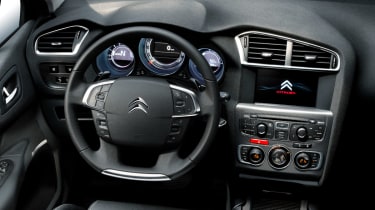
Interior, design and technology
The Citroen C4 went on sale in 2011, but was lightly revised in 2015 with a mid-life nip and tuck. Nevertheless, alongside such excellent contemporary rivals as the Volkswagen Golf, Ford Focus and Honda Civic, the C4 is showing its age, as it doesn’t feature the unusual and unique design features of the C4 Picasso people carriers or C4 Cactus crossover.
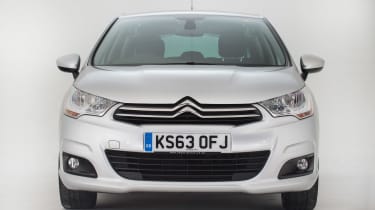
The famous double-chevron emblem is nicely integrated into the grille, with two bars that span the full width of the inlet, but the overall look is fairly bland. Although the headlamps have been fitted with daytime running lights as part of the facelift, the main clusters date the C4 as a previous-generation Citroen product.
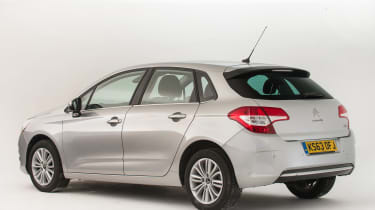
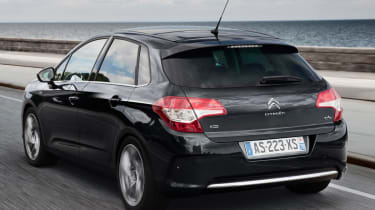
There are a pair of cut-outs lower down and at either edge of the rear bumper that mimic the shape of the tail-lights, while a silver insert and small contrasting roof spoiler at the top of the bootlid are the only other notable design details.
The 2015 update brought the button-free touchscreen infotainment system from the new Peugeot 308, but only to Flair models. Handily, the manual air-conditioning controls remain, as the 308's controls are fiddly to access via the touchscreen.
Given the centre console is so wide, the seven-inch touchscreen infotainment system looks small, while the large digital ventilation controls that sit underneath take up a lot of space. The layout leaves a large expanse of hard black plastic in front of the passenger, and compared with models like the C4 Cactus, with its design-focused dashboard, the standard C4 is shown up by its Citroen stablemates, as well as its rivals here. The latest steering wheel is less cluttered too, with only the most necessary buttons such as cruise control and stereo volume finding their place.
Top-spec Flair cars get tinted rear windows, chrome door mirrors and front fog lights, while all apart from the basic Touch models get alloy wheels. The 2015 facelift saw the C4 get a new ‘light signature’, with LED running lights at the front and 3D-effect tail-lamps first seen when the brand’s range incorporated the DS3 Cabrio. However, the most important change was the addition of the seven-inch touchscreen, but even these tweaks haven’t done much to hide the Citroen’s age. Get behind the wheel and it’s obvious through how the C4 rides and handles.
On the downside, the rear seats are a little cramped, and the Citroen feels light on luxuries compared to the likes of the technology laden Ford Focus. And although the material fit, finish and overall feel of the quality is all acceptable, it doesn’t feel anything like as ‘rock-solid’ as the VW Golf’s interior.
Sat-nav, stereo and infotainment
The infotainment spec of the Citroen C4 is decent enough, but not exceptional. The entry-level Touch model comes with an RDS MP3/CD player with six speakers, while the Feel upgrades the radio to DAB digital and also introduces Bluetooth for hands-free calling and media streaming.
The range-topping Flair gets the seven-inch touchscreen to control the system thrown in, but you can also have it as an option costing around £460 on the Feel. Citroen’s eMyWay sat-nav is £900 extra on the Feel, but costs around £590 on the Flair as the touchscreen is already included. It also adds Citroen’s MirrorScreen function, which incorporates Android Auto and Apple CarPlay connectivity, mirroring your smartphone’s screen on the seven-inch display.
You can also get sat-nav on the Flair as part of a £900 Convenience Pack, which also adds front parking sensors (a rear camera is included already), key-less go, blind spot monitoring and folding mirrors with memory function.
Of course none of these extras are going to add much value to the C4, so you'll be looking at similar prices for used models with different specs.
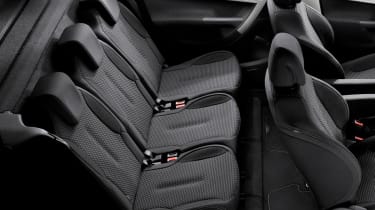
Practicality, comfort and boot space
The big expanses of plastic not only give a cramped feel to the cabin, but they reduce usable storage. The tray in front of the gearlever is recessed, which makes it difficult to put modern smartphones in (another trait of the C4’s age), while right-hand-drive cars get a smaller glovebox thanks to the fuse box and its fixed position to the left of the dashboard. However, the C4’s worst trait is its driving position – in particular, the way your body lines up with the high-set pedals. Plus, there is less space for rear passengers.
Size
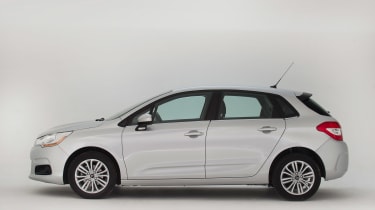
The C4 hatch is 4,329mm long, 1,789mm wide and 1,489mm tall. In comparison, the Ford Focus is a little bigger at 4,360mm x 1,823mm x 1,469mm, while the VW Golf is a little smaller, measuring 4,255mm x 1,799nn x 1,425mm.
Leg room, head room & passenger space
The car is a full five-seater, but the C4 struggles against roomier rivals such as the Skoda Octavia because a large load area eats into the rear seat space.
However, it’s not too bad in the back, especially if you only usually carry kids. Taller adults who are over six foot may feel a little cramped, both for legroom and headroom. There are no such problems up front.
The rear doors open wide for easy access, the seats in the back fold down in a 60:40 split and there are ISOFIX child seat mounting points as standard.
Boot
While the Citroen’s 380-litre boot shows the limits of the platform’s packaging, this rises to 408 litres if you include the under floor storage. Fold the rear seats and there’s 1,300 litres of space, but this means the C4 still trails a Skoda Rapid by 190 litres.
Sadly the car's design does make it rather awkward to load when you fold the seats down, because they lie at an angle – a shame as the total load volume goes up to 1,300 litres.
All C4s come with a compressor-based get-you-home kit instead of a spare wheel, so we’d recommend the extra £75 for a full-size spare or space-saver.
If you want to pull a caravan, the 2.0-litre diesel is the best for the job with a maximum towing capacity of 1,750kg. That’s a couple of hundred kgs more than the 1.6-litre diesels and the petrol.
How much is your car worth? Find out with our free car valuation tool...