Electric car taxes should be ringfenced for cheaper public charging, drivers say
A new survey shows broad support among car drivers for the rumoured pay-per-mile tax on EVs, but they want the cash used for better charging and roads.

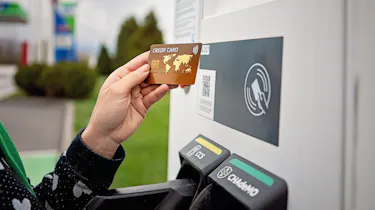
Motorists want any increase in electric-car taxation to be directed towards cheaper public charging. That’s the headline result of a new survey that also indicates 71 per cent of UK adults believe that EV owners should pay at least some road tax for their driving.
The study of just under 2,250 respondents by consultancy firm Stonehaven comes in the wake of strong rumours that Chancellor Rachel Reeves will implement a pay-per-mile tax on electric cars in her imminent budget. Just under half of the people in the survey (49 per cent) would like to see the revenue raised from that going into cheaper public charging rather than being absorbed into general Treasury coffers.
In addition, 61 per cent were in favour of the cash raised being used to improve the charging infrastructure, and 83 per cent said they’d like to see it go towards fixing potholes in the roads.

While it is widely accepted that the Government will have to do something to address the issue of electric car taxation as the EV transition gathers pace and the significant tax receipts from petrol and diesel fuel sales inevitably decrease, the car industry is concerned about the timing of the decision. If the rumoured tax, which is equivalent to approximately 3p per mile, does materialise, it will come at a time when manufacturers are already struggling to meet ZEV mandate targets that require 28 per cent of all new cars sold by mainstream brands in 2025 to be electric.
Public charging costs at record highs
The issue of public EV-charging costs has grown in prominence as the gap in purchase price between EVs and petrol cars has diminished. The cost of charging an EV for those who don’t have access to home charging is now arguably the biggest barrier to EV ownership - particularly in the towns and cities to which electric cars are ideally suited.
According to the RAC, the average price of pay-as-you-go public charging in the UK is 72p/kWh for fast chargers (8-49kW) and 81p/kWh for rapid chargers (50-149kW), which is close to a record high. Compare that to the average domestic electricity cost of 26p per kWh or the 8p that is widely available overnight on specialist EV tariffs, and it’s clear why EVs are considerably less attractive to those forced to rely on public charging.
Rapid-charging firms will tell you that the cost associated with rapid charging comes with its convenience and speed. However, according to the RAC, there are also other factors at play; chargepoint operators (CPOs) are investing huge sums into expanding the UK’s charging infrastructure, and while residential electricity bills are protected by regulator Ofgem’s price cap, no such thing exists for the public charging sector, meaning there is no limit to what CPOs can demand.
The real issue for many in the industry, however, is what’s known as the “pavement tax”. Using any public charger – including slow ones that you find at the side of the road, or attached to lampposts – requires you to pay the standard 20 per cent rate of VAT, as opposed to the much lower five per cent rate applied to domestic or commercial electricity. It would be possible for the Chancellor to equalise the VAT levied to counterbalance some of the negative impact that any pay-per-mile EV tax could have on sales.
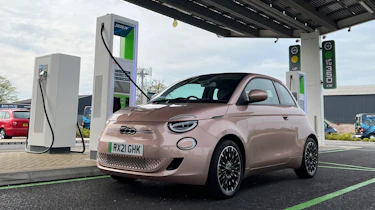
While data from the RAC shows that the average EV driver conducts just 15 per cent of their charging using public facilities, many do not have that option and would therefore be forced to pay the higher price of using public chargers.
“It’s vital that public charging costs for drivers come down,” said RAC spokesperson Rod Dennis. “Reducing the rate of VAT charged on electricity sold at EV chargers from the present 20 per cent to match the 5 per cent charged to domestic customers would be a huge help.”
Dennis also hinted that a future review from Ofgem could see a reduction in the fees charging networks have to pay, which could in turn bring costs down for consumers.
The head of trade body ChargeUK, Vicky Read, also called for reform back in 2024. She said: “[We need] to help charge point operators offer public charging that is as affordable as possible. But [they] are faced with significant costs outside their control. Standing charges for rapid charging have risen more than 10-fold in the past 18 months, wholesale electricity prices remain among the highest in the EU28, and operators in the UK do not benefit from carbon credit schemes, unlike many of our European counterparts.
“We call on the Government and Ofgem to act now to ensure that affordability is not a hurdle in the transition to EVs.”
Keep recharging down to a minimum with the longest range electric cars on sale...