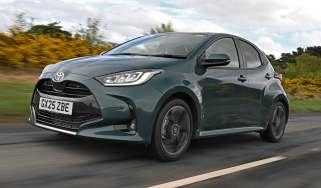
New Toyota Yaris in-line for major rethink to try and please hybrid and EV buyers
The Mk5 Toyota Yaris will be offered with internal-combustion, hybrid and electric powertrains to suit buyers’ needs, and our exclusive images preview how it could look

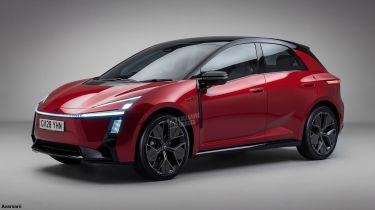
Buyers looking for a Toyota supermini will be spoiled for choice in a few years’ time, because the Japanese giant is preparing a whole new generation of Toyota Yaris. Not wanting to alienate any of its loyal customers, the all-new iteration due in late 2027 or 2028 will follow the upcoming Corolla’s lead by offering fully electric, hybrid and ICE options for markets around the world.
Toyota’s European vice president of strategy and marketing, Andrea Carlucci, told Auto Express: “If there is a maker with a strong presence in the lower categories, it’s Toyota. We have a position of leadership, with a lot of consistency over time.

If electrification is the direction, I think we cannot avoid having a fully electrified version. When, I cannot comment, but it looks to be quite obvious.”
But Toyota wants to be ready with the right product for its customers at the right time. And although it was confirmed that a new electric Yaris is on the cards, it won’t come at the expense of a hybrid-powered variant.
Carlucci continued: “For now, the platform has to be strong, especially on small cars, when it comes to delivering a hybrid powertrain. The ideal path is to offer a platform where we have multi-energy options, so delivering different powertrains that are the right solution for every customer. Let me put it to you this way: a multi-energy approach isn’t just one solution. It has to be the solution.”
Toyota has already announced this is the direction it’s taking with the larger Corolla for its next generation. This will see the development of a new platform capable of supporting ICE, hybrid and BEV powertrains. All Corollas will have the same styling, interior tech and branding, offering buyers a suitable powertrain no matter where in the world they are. The same will be true of the next Yaris.
Core to this flexibility is that new platform, which will be variable enough to support the vastly different requirements of its future powertrains. These will have to perform, because the electric Yaris will need to offer a 250-mile range comparable to that of rivals such as the Renault 5, or future Volkswagen ID. Polo and Cupra Raval.
On the ICE front, the current Yaris hybrid is one of the most efficient new cars on sale, so would need to at least match, if not improve on the current car’s near-80mpg rating.
This is a different choice to the ones made by key supermini rivals such as Volkswagen and Renault, which both offer distinct models with ICE/hybrid or all-electric powertrains. The ID. Polo will join an updated version of the existing car under the same name, while the French brand has entirely distinguished its Renault 5 from the latest Clio hybrid.
But what will the future Yaris look and feel like? Carlucci gave a clue by telling us: “My main concern today from a planning perspective is to make sure that we keep an authenticity to what we do. For an electric car, this is a challenge. With hybrids, it was an easier game because we have so much goodwill in this area. So this is where we have to focus right now.”
As our exclusive images of a hybrid variant show, Toyota’s future design language won’t stand still, with sharper lines and a more futuristic look that disconnects the car’s design from any particular powertrain.
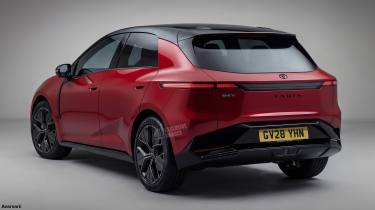
It will have typical supermini exterior proportions, with a short bonnet and rear overhang. New-age Toyota design cues, such as technical-looking headlights and a single lower grille to give the Yaris a far more contemporary feel, will be paired with a diving windowline. This won’t just look interesting, it will improve forward visibility and give the cabin a greater sense of space.
The current rounded wheelarches and soft surfacing will be a thing of the past – Toyota’s new models are all about giving buyers something that looks and feels more substantial, expensive and technical than previous generations. This will be a small car, but it’s not designed to be cheap.
We also expect to see more striking colour, wheel and trim options, and a doubling down on contrasting roof finishes and clever design touches that reference the Corolla Concept seen at the 2025 Tokyo Mobility Show.
A greater connection to the brand’s motorsport division is also on the cards. Toyota’s GR Sport trim has been a phenomenal global success, increasing the average customer spend on the back of a motorsport connection and the homologation specials it creates, like the GR Yaris.
The Yaris will remain a five-door hatchback in its mainstream form, but any new generation of GR Yaris (a three-door car) is still yet to be confirmed. Looking at Gazoo Racing’s future projects, we know a new 2.0-litre four-cylinder petrol engine is in the works for the brand’s high-performance models, but we don’t know if it could be used in something as small as the future Yaris.
There’s a good chance that the brand will trickle down some of its motorsport knowledge to a less extreme, but still performance-focused model, though. Reports in Japan suggest a new turbocharged 1.3-litre three-cylinder engine is in development and it could form the basis of a new front-wheel-drive hot hatch derived from this same platform.
Just like the full-fat GR Yaris, this is being built to homologate a rally car – and it will compete in the lower Rally4 class that demands front-wheel drive.
Inside, there will be a total overhaul of the digital interfaces, with a more open feeling, larger glass area and simplified surfaces. The current Yaris, which is known for its complex and rather chunky dashboard, will instead use floating screens and clever new storage solutions – something the original Yaris was well known for.
From a hardware perspective, the torsion-bar rear suspension set-up will be designed for maximum space efficiency on mainstream models, helping to keep rear boot space and legroom competitive for the class.
When will we see the new Yaris? Traditional model cycles suggest a replacement should be due to arrive in 2027, but Toyota has a habit of stretching these, especially if there’s a big change on the horizon. Considering the Yaris will need to adopt a new and far more flexible architecture, this is likely to be the case. We don’t expect much news until then, or possibly 2028.
What’s it got to beat?
Superminis will soon need to offer hybrid and EV options in the UK, but not every firm is following Toyota by delivering the two powertrains in one model. The Yaris will face rivals that are designed specifically for their chosen powertrain, and these two will be among its toughest.
Volkswagen ID. Polo

We’ve driven the ID. Polo EV in late prototype form and can already tell it’ll lead the pack for refinement, driving engagement, tech and range, and is set to beat the Renault 5 with more class and sophistication.
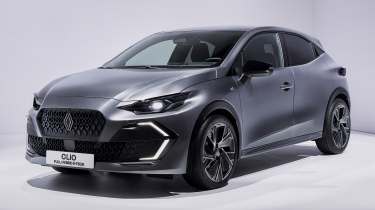
Where Renault hits back is with its impressive new Clio hybrid. It’s not as distinctive to look at as the 5, but it’s very efficient, comes with an engaging chassis and lots of great tech that’s on par with the Renault 5.
Did you know you can sell your car through Auto Express? We’ll help you get a great price and find a great deal on a new car, too.