Cars are more dangerous for women than men
Study shows that female passengers don't get the same levels of crash protection, unless they are in a Volvo

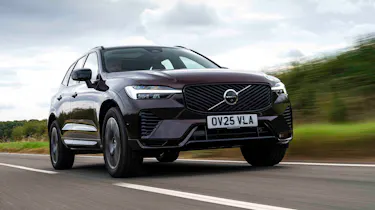
Female passengers aren’t always offered the same level of crash protection as males – unless they’re in a Volvo, that is. The Swedish manufacturer has just published a study based on real-world crash data that highlights how all body types are offered identical levels of crash protection in its cars, something that previous research has shown isn’t a given.
Inequalities when it comes to in-car safety have been well documented over the years; for example, a 2024 study by the UK Transport Research Laboratory found that female occupants are “significantly” more likely to be injured in a car accident than their male equivalents – particularly in side-impact scenarios. This is backed up by data analysed by the University of Virginia Centre for Applied Biomechanics, which found that females are 47 per cent more likely to be seriously injured in an accident and 17 per cent more likely to be killed.
So why does this inequality exist in the first place?
Speaking to Auto Express, study lead and senior technical specialist, Lotta Jakobsson, explained that current standardised crash tests only cater for certain body types: “We have three sizes of adult crash test dummies today, and that's good. But even if we double it, it will still [represent] a very small part of the population.”.

Since their introduction in the seventies, crash test dummies have been almost exclusively based on the male physique, meaning they don’t take into account the inherent structural differences between the sexes. Even today, European crash tester Euro NCAP’s only adult female dummy is, in effect, a shrunken-down version of the male equivalent, representing just five per cent of the female population. The first official regulatory dummy built to represent the average female, the THOR-5F, was only introduced in late 2025 and has yet to be employed in testing by Euro NCAP.
But this isn’t an issue exclusive to biological sex; Jakobssen highlighted how “everyone is different from each other… It's not just one person being the most vulnerable, because it really depends on the situation.”

The part-time Chalmers University of Technology professor used the example of an older woman stating that they are typically “more at risk because they simply are more fragile”. Jakobssen described how the typical adult might be able to cope with impacting their knees on the dashboard in an accident, but someone with more restricted load-bearing properties might require a knee airbag to be kept safe.
“But that's just one case,” said Jakobssen. “The fragile old lady might not have long legs and she might not even hit [her] knees because she's held back by the seatbelt.”
At the other end of the scale, Jakobssen illustrated the scenario of a car running off the road and into a ditch. Here, a larger, heavier individual could be the one most at risk given the intense vertical load from the crash.
This inequality is glaringly obvious in Volvo’s study which is backed up by real-world data that stretches back over five decades. However, thanks to gradual innovation over the years such as the introduction of side impact protection systems in the eighties and more recently, the multi-adaptive safety belt, Volvo says its cars now offer a near-identical safety risk for both male and female occupants.
The brand says this is the first study of its kind, with other similar investigations being conducted by independent organisations on singular models, rather than entire manufacturer line-ups. It’s also important to highlight how many safety features present in contemporary Volvo models are also available on their competitors. Yet aside from being a marketing exercise, Volvo says that publishing its findings could also raise awareness for safety inequality: “It’s like a cookbook of what you could do [and] how you could do [it] if you are interested in addressing different areas,” Jakobssen said.
She told us that current safety regulations focus on “addressing singular points which are super-important to get the five stars, but may not represent the real world”. By shining a light on the real-world infinite variability of different scenarios and body types, Volvo believes it has the potential to incite innovation from both manufacturers and lawmakers for the benefit of everyone.
In its ‘Vision 2030’ mission statement, Euro NCAP has proposed introducing the THOR-5F dummy in order to help evaluate whether a car is correctly “designed for all”. Yet while Jakobssen says that any widening of safety regulations is “good”, the sheer amount of tests required to cater for absolutely everyone makes legislating for it unviable. With this in mind, she’s calling on other manufacturers to innovate, claiming: “It's all about your own ambition. If you want to go that extra mile, then that pays up.
“If you address that vulnerable person, the good thing is the other one is protected too, because they are better off from the start,” Jakobssen explained. “There's a lot of regulation[s] for cars that help protect everyone, like you're not allowed to have sharp edges inside the compartment in some areas where you're likely to impact. And that benefits everybody. That doesn't have any gender difference.”
Did you know you can sell your car through Auto Express? We’ll help you get a great price and find a great deal on a new car, too.