New roadside driver tiredness tests may open door for fines
A blood test promised in two years will show whether driving is impaired by lack of sleep

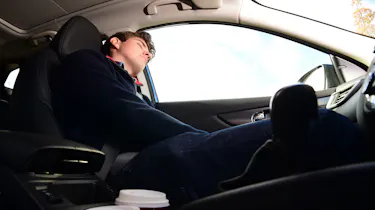
Researchers in Australia hope to target one of the major causes of traffic accidents with a new blood test that will show whether a driver was impaired by lack of sleep.
If successful, the team at Monash University in Melbourne will provide police with a means to prosecute drivers who either cause or risk causing accidents through tiredness. Evidence is claimed to show that having less than five hours of sleep makes a driver as risky as someone over the breathalyser limit for alcohol in some parts of the world. Here in the UK, data suggest that tiredness may be a factor in 20 per cent of all vehicle accidents, and up to 25 per cent of accidents that cause fatalities or serious injury.
So far the Australian team has identified five chemical biomarkers in the bloodstream that can tell them whether subjects have been awake for 24 hours or more with an accuracy rate of 99 per cent, However, the researchers say more study is required in order to determine whether these markers can be utilised to reveal the number of hours sleep a person actually has.
One of the research scientists Professor Shantha Rajaratnam told The Guardian that although forensic tests to make determinations could be available to laboratories within two years, the prospect of equipping police with roadside test equipment would be several years further off. “With the right investment to be able to scale this, I reckon that within five years we will be able to implement these biomarker-based tests – at least in safety-critical industries such as trucking, commercial aviation and mining,” he said.
The Department for Transport here in the UK says it’s not currently considering sleep tests or a legal minimum sleep level for drivers, but confirms it has ‘noted’ the Australian research.
It is already a legal requirement that drivers must be fit to drive any vehicle, and road safety campaigners have welcomed the news of possible future tiredness tests. “Driver fatigue is a significant and serious issue. Government statistics show in 2021, 467 people were either killed or seriously injured in collisions where fatigue was noted as a contributory factor. Therefore, any work to reduce the impact of sleep deprivation is welcome as we strive to improve road safety and save lives,” said Sonya Hurt, boss of the Road Safety Trust.
Find out how lack of sleep can affect your driving with our exclusive driver tiredness investigation...